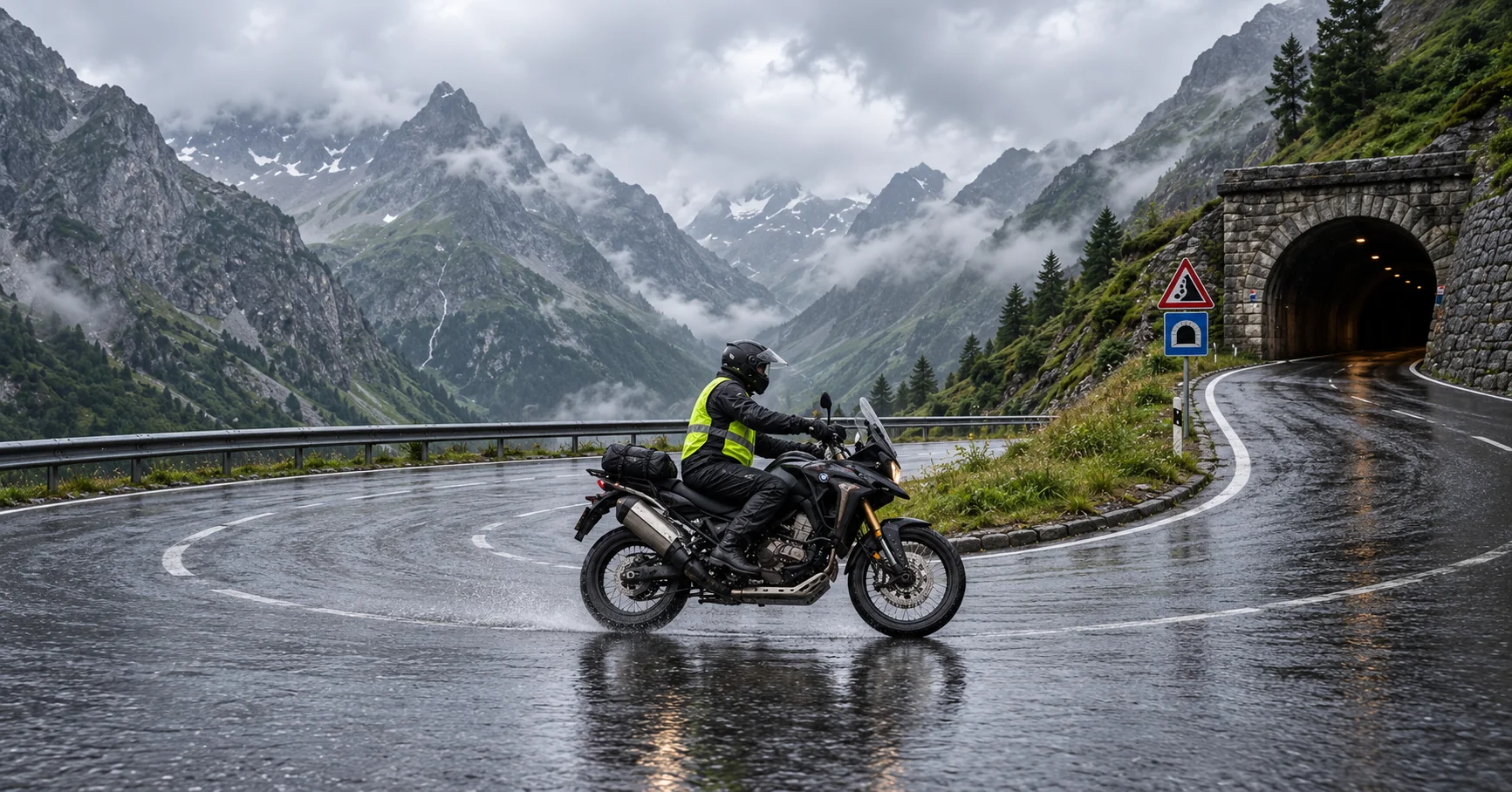
Let’s be honest: riding a motorcycle in the rain is doable, but you need to rethink your whole approach during a tour. Start with the basics: check the weather along your route, get your bike and waterproof gear ready, and make sure you’re flexible enough to cut the day short if needed. If you can’t see clearly, feel cold, or you’re having trouble handling the bike, just pull over somewhere safe and wait it out.
In Italy, your route actually changes how easy it is to manage the rain. A short hop between towns may give you more places to stop than a long, winding ride over mountain passes. Plan for the conditions ahead, think about your experience, and make a mental list of where you can leave the road if things turn bad.
Make a Rain Plan Before You Hit the Road
First, check the forecast for your destination and everywhere you’ll pass through. Mountain routes? Check both the pass and your overnight town. Look for severe weather warnings or road closures before you lock in your day’s ride.
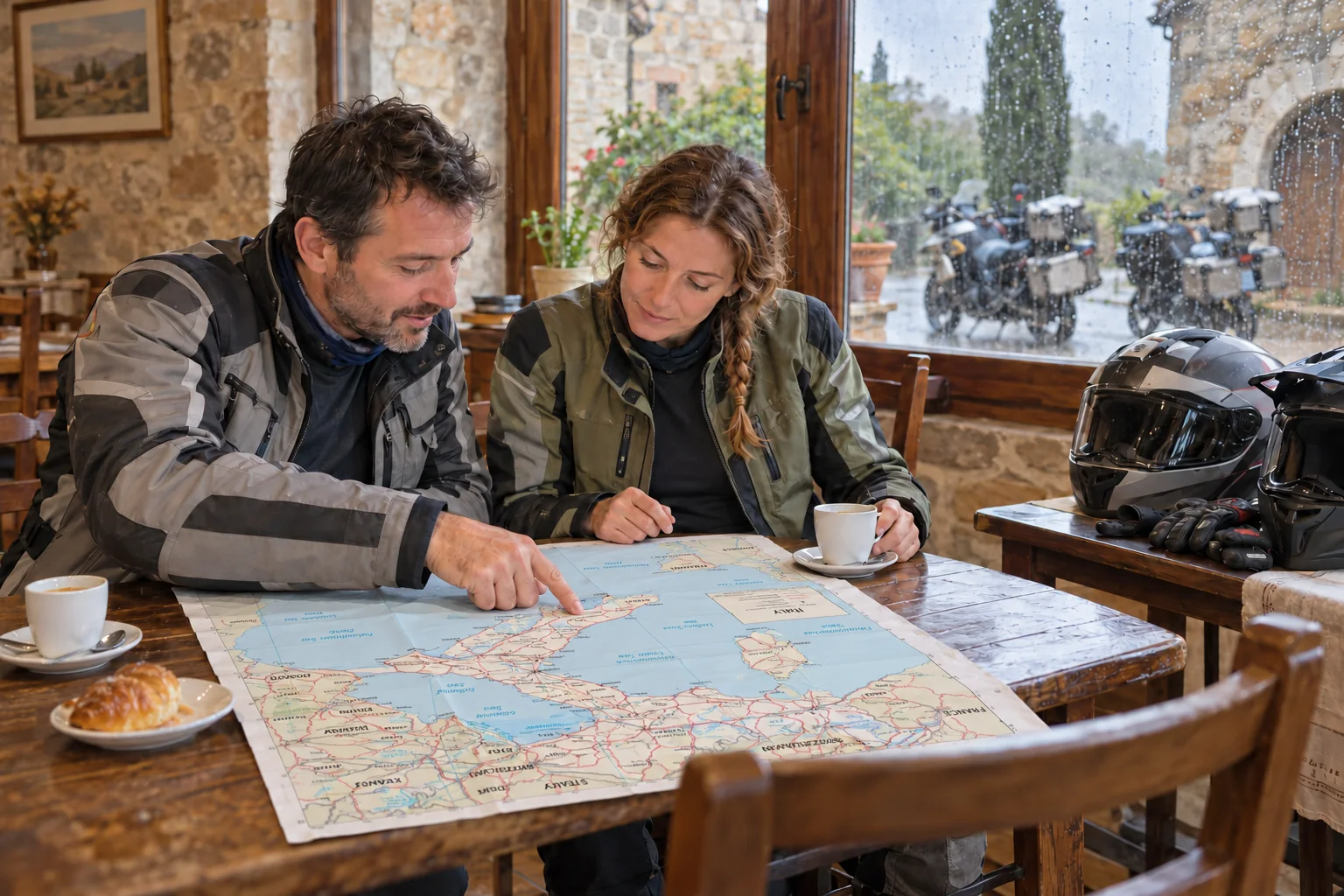
Italy’s Civil Protection Department posts national weather bulletins. Pair those with local forecasts and updates from regional authorities. A general forecast is just part of the story; a local warning or road closure takes priority.
Save a backup, shorter route before you leave. Pick out spots for fuel, food, and, if needed, a longer break. Keep your hotel address and rental contacts handy, preferably offline.
Say your route includes a mountain pass plus some optional village stops: decide which parts you could skip ahead of time. Work this out while parked, looking over your map. Forget about covering every mile you planned. A wet afternoon isn’t worth fighting for every stretch you missed in the morning.
If you’re still figuring out travel dates, check our guide on the best time to tour Tuscany, the Dolomites, Amalfi and Sardinia. It’ll help with the seasonal planning.
Know What Might Change Your Day
Here’s a quick table to help you plan. It isn’t a one-size-fits-all rulebook.
| Situation | What to check | Decision to consider |
|---|---|---|
| Rain is forecast along the route | Timing, local warnings and available stops | Shorten the day or delay leaving |
| Your route includes a mountain pass | Forecast at the pass and current road status | Take a different route or postpone this stretch |
| Spray or visor fogging blocks your view | Can you see the road and traffic clearly? | Leave the road at a safe stopping place |
| You hear thunder | Is there a substantial building or enclosed, metal-topped car nearby? | Seek proper shelter |
| Flooding, debris or a road closure blocks the route | Official directions and a usable alternative | Turn back or wait; don’t try to force your way through |
Check the Bike While It’s Still Dry
Take five minutes before loading up. Look at the tire tread, check for any damage, and measure tire pressure. Use the manufacturer’s recommended pressure for your load. Michelin recommends checking tire pressures cold. Don’t lower them simply because rain is forecast.
Check the lights and make sure nothing in your luggage messes with your steering or controls. Fix any problems with tires, lights or controls before you roll out.
On a rental bike, ask for a rundown on features you don’t know. Find out if it’s got ABS, traction control, or a rain mode and how the manufacturer expects those systems to work. Do all this while you’re parked.
Remember: even the fanciest systems have limits. BMW Motorrad says ABS and traction control can’t defy physics or stop every fall. Keep that in mind when you pick your pace, even with top-of-the-line gear.
Keep Rain Gear Easy to Grab
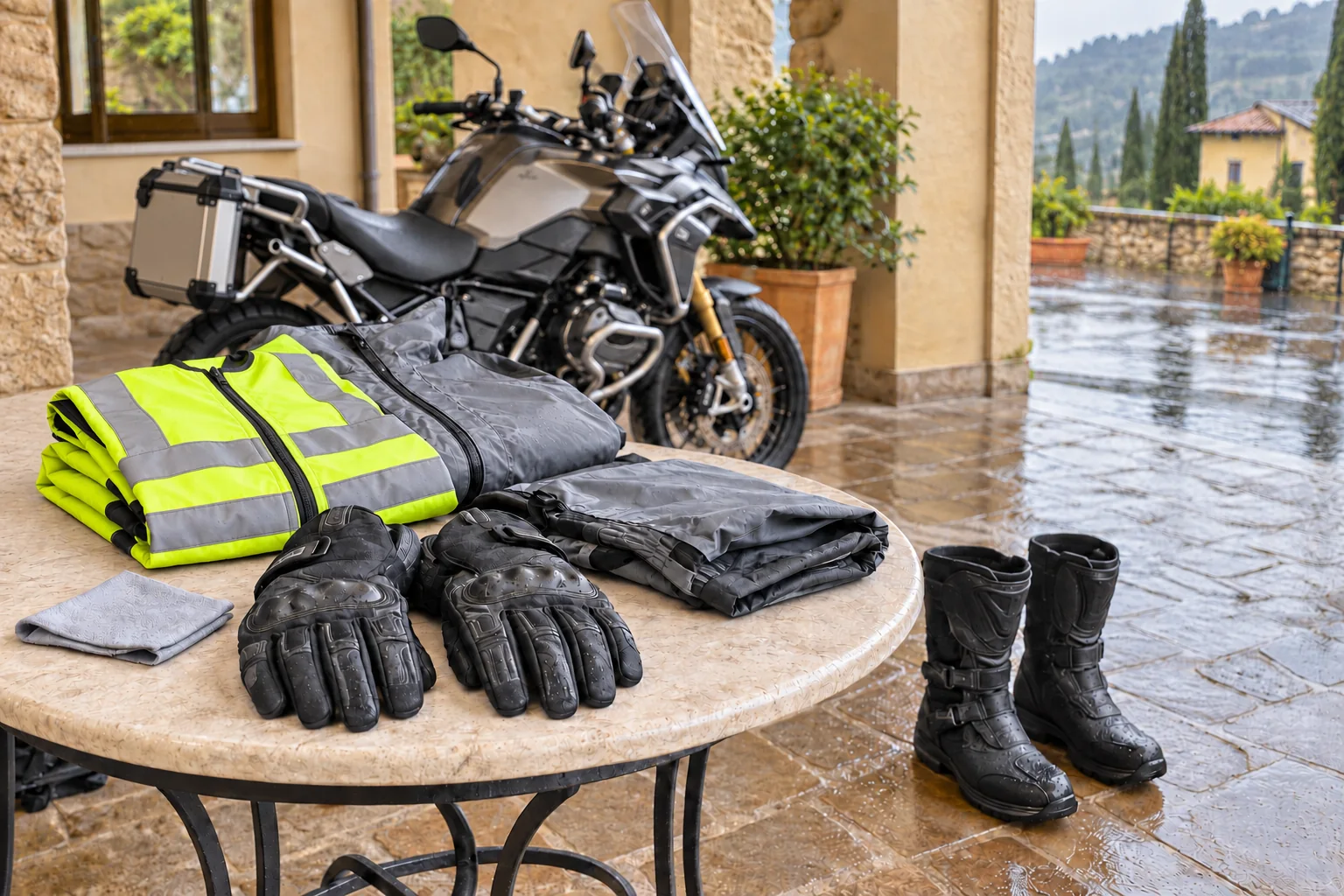
Pack your rain suit on top, not buried under everything else. Check the fit over your riding gear before you leave. Sit on the bike and make sure you can reach everything comfortably.
Get your wet-weather kit ready:
- Waterproof gloves: Make sure you can operate switches and levers.
- Waterproof boots: If you use covers, double-check they don’t mess with the pedals.
- Reflective riding gear: Keep reflective details visible after adding your rain suit. A reflective jacket under a dark layer isn’t much help.
- Dry clothing and documents: Keep a spare layer, documents, and electronics in waterproof storage.
- Clean visor cloth: Keep it separate from anything used on the bike.
Fit is just as important as having the right gear. The Motorcycle Safety Foundation warns: gloves or boots that don’t fit well can make braking and shifting tricky.
Headed for the mountains? Check out our Stelvio Pass gear checklist.
Put on your rain layers at a proper stop before you get soaked. Don’t try to wrestle them over wet clothes on a roadside.
Deal With Motorcycle Helmet Fogging Before You Ride
Clean your visor like the helmet maker says. Check for damage. Know how the vents work before you leave.
A compatible anti-fog insert, such as a Pinlock lens, can help with visor condensation. Make sure it fits your visor and seals properly. Stick to the helmet and insert instructions; don’t assume every lens or cleaning product works the same.
Pinlock’s instructions call for gentle cleaning and air drying. Don’t use household glass cleaners or sketchy treatments while touring.
Get your visor ready for changing light. Make sure it’s good for both daytime and any nighttime riding.
If fog starts obscuring your view, pull over somewhere safe and sort it out. Don’t push on just because the next town is “close.” Make sure visibility is clear before you hit the road again.
How to Ride a Motorcycle in the Rain
Wet-road traction changes with the surface and conditions. The New York DMV’s motorcycle guidance on slippery surfaces advises slowing down before wet curves, avoiding sudden moves and using both brakes smoothly.
Use smooth throttle inputs and progressive braking: build pressure gradually instead of grabbing a lever. Increase your following distance so you have more time to react without abrupt moves.
Watch for painted road markings, manhole covers, mud and wet leaves. Think about lane position as conditions change; no part stays ideal for the whole ride. Check your space before moving.
Treat standing water with caution. You can’t always see how deep it is or if there’s damage underneath. Don’t just ride through flooded sections to see if they’re passable.
This guide assumes you know the basics. If riding in rain is new to you, get some instruction in a controlled environment before your trip.
Pick Your Stops Before You Need Them
Mark out places where you can truly get clear of moving traffic. Staffed fuel stations, parking areas and businesses with suitable parking can be options, but check opening hours and access just to be sure.
A safe stopping place for rain isn’t necessarily shelter from lightning. Trees, exposed roadside shelters, or your motorcycle don’t count as real protection.
If you hear thunder, find proper shelter. The National Weather Service’s lightning advice recommends a substantial building with electricity or plumbing, or a metal-topped enclosed vehicle with windows closed. Wait at least half an hour after the last thunder before leaving shelter.
For rain (without thunder), there’s no magic waiting period. Reassess visibility, your route, and how you’re feeling before pressing on. Change your plan if it doesn’t fit anymore.
Talk the Plan Over With Your Group or Passenger
Before you leave, decide how your group will signal a stop or handle getting separated. Save the meeting point somewhere easy to check while parked.
If you need to stop, tell your guide or fellow riders early. Don’t let distance to the next hotel push you past your comfort zone. Bring up options before it’s too late.
With a passenger, agree on a quick way to ask for breaks. Check their gloves, boots, and dry layers too. Our guide to touring with a passenger covers this.
If you’re booking an organized tour, ask about their weather policy ahead of time. Route changes, alternative transport, and cancellation terms all depend on your agreement. Confirm what applies to your trip.
After a Wet Day on the Bike
At the hotel, leave time to unbag wet gear and sort anything that needs care before tomorrow. Follow the instructions for your helmet, gloves, boots, and riding clothes, and use the drying options allowed.
For chain-driven bikes, stick to the manufacturer’s cleaning and lubing instructions after riding in the wet. Let the rental shop handle work you’re not authorized or equipped to do.
Report warning lights, damage, or changes in handling before your next ride. Don’t assume a problem is gone just because the bike dried out.
Leave tomorrow’s waterproof gear handy. A quick evening check beats discovering you’ve got a wet glove or dirty visor as you’re packing up in the morning.
Be Ready to Change Your Ride
Plan your Italy trip with days you can adjust. Optional stops? Keep them optional. Know where you can leave the route, and don’t hesitate to say when conditions feel like too much.
Before you book a tour, ask how they handle wet days. Consider their answer alongside the day distances and stops. Make sure the trip fits you.
Frequently Asked Questions
Can you ride a motorcycle in the rain?
Yes. Just make sure the conditions, your bike, and your skills are up to it. Check the forecast, road, and your own readiness before you go. Delay or stop if you can’t see or handle the bike safely.
Does rain damage a motorcycle?
An ordinary rain shower does not automatically mean damage. After riding wet, follow care instructions and do chain maintenance if needed. Floodwater is different. Don’t ride through it, and get the bike checked before using it again if it’s been affected by flooding.
Can you ride a motorcycle in a thunderstorm?
Seek proper shelter instead of continuing. Motorcycles don’t protect you from lightning. Go for a substantial building or an enclosed, metal-topped car and wait at least 30 minutes after the last thunder before leaving.

-
Tours
Alps, Lakes & Dolomites Dream Ride Tour (Black Friday 15%)
Price range: $5,610.00 through $8,780.00 Select options This product has multiple variants. The options may be chosen on the product page -
Tours
Venice, Prosecco Hills and Emerald Slovenia Tour (Black Friday 15%)
Price range: $6,375.00 through $9,630.00 Select options This product has multiple variants. The options may be chosen on the product page -
Tours
Amalfi Coast, Capri & Ischia Dream Ride Tour (Black Friday 15%)
Price range: $5,950.00 through $9,375.00 Select options This product has multiple variants. The options may be chosen on the product page -
Tours
The Heart of Italy: Tuscany, Umbria & Apennine Passes Tour (Black Friday 15%)
Price range: $5,440.00 through $8,390.00 Select options This product has multiple variants. The options may be chosen on the product page -
Tours
The Three-Nation Alpine Grand Tour (Black Friday 15%)
Price range: $6,545.00 through $10,395.00 Select options This product has multiple variants. The options may be chosen on the product page -
Tours
The Mediterranean Odyssey: Sardinia & Corsica Tour (Black Friday 15%)
Price range: $6,590.00 through $10,395.00 Select options This product has multiple variants. The options may be chosen on the product page -
Tours
The Sardinia Island Discovery Tour (Black Friday 15%)
Price range: $4,675.00 through $7,370.00 Select options This product has multiple variants. The options may be chosen on the product page