Motorcycle hand signals are how riders talk on the road, especially when you’re out in a group and need to get a message across, like slowing down, warning about a nasty pothole, changing the riding formation, or signaling a fuel stop. If you’re planning to join a group ride in Italy, make sure you learn which signals your guide uses and what to do if you don’t catch one. A little preparation goes a long way.
American riders probably know a few classic gestures already, but some will be different, and what’s obvious at home might throw someone off in a different country. Think of this as a warm-up for the all-important pre-ride briefing. Once you hit the road, the signals everyone agreed on are the ones that matter.
Get Everyone on the Same Page Before You Roll Out
A riders’ meeting isn’t just a formality. It’s your chance to watch every gesture up close, ask questions, and practice with gloves on. It’s so much easier to sort out confusion while parked than to interpret a raised hand as you near a fork in the road.
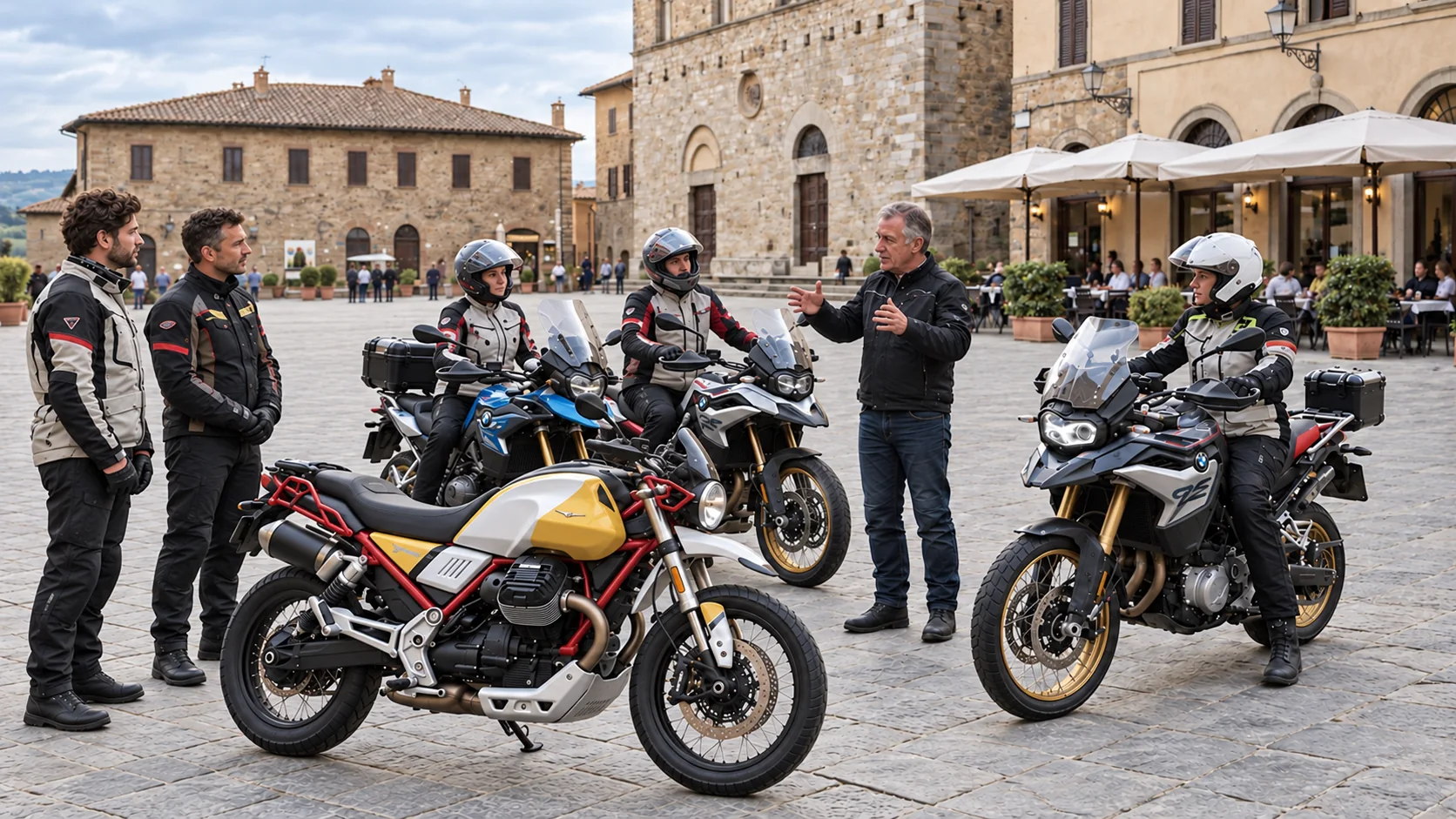
The Motorcycle Safety Foundation recommends this: before you start riding, talk through the signals, the route, and the plan for fuel and rest stops. Pick a lead rider and a sweep rider, also called the tail rider (that’s the person at the back of the group).
Ask your guide to cover:
- Which gestures mean slow down, stop, or pull over?
- How to ask for fuel, a bathroom, or help?
- Which signals need to be passed all the way back?
- What’s the plan when roads get tight or winding?
- Where to go if you get separated by traffic?
- Who to contact if you can’t keep going?
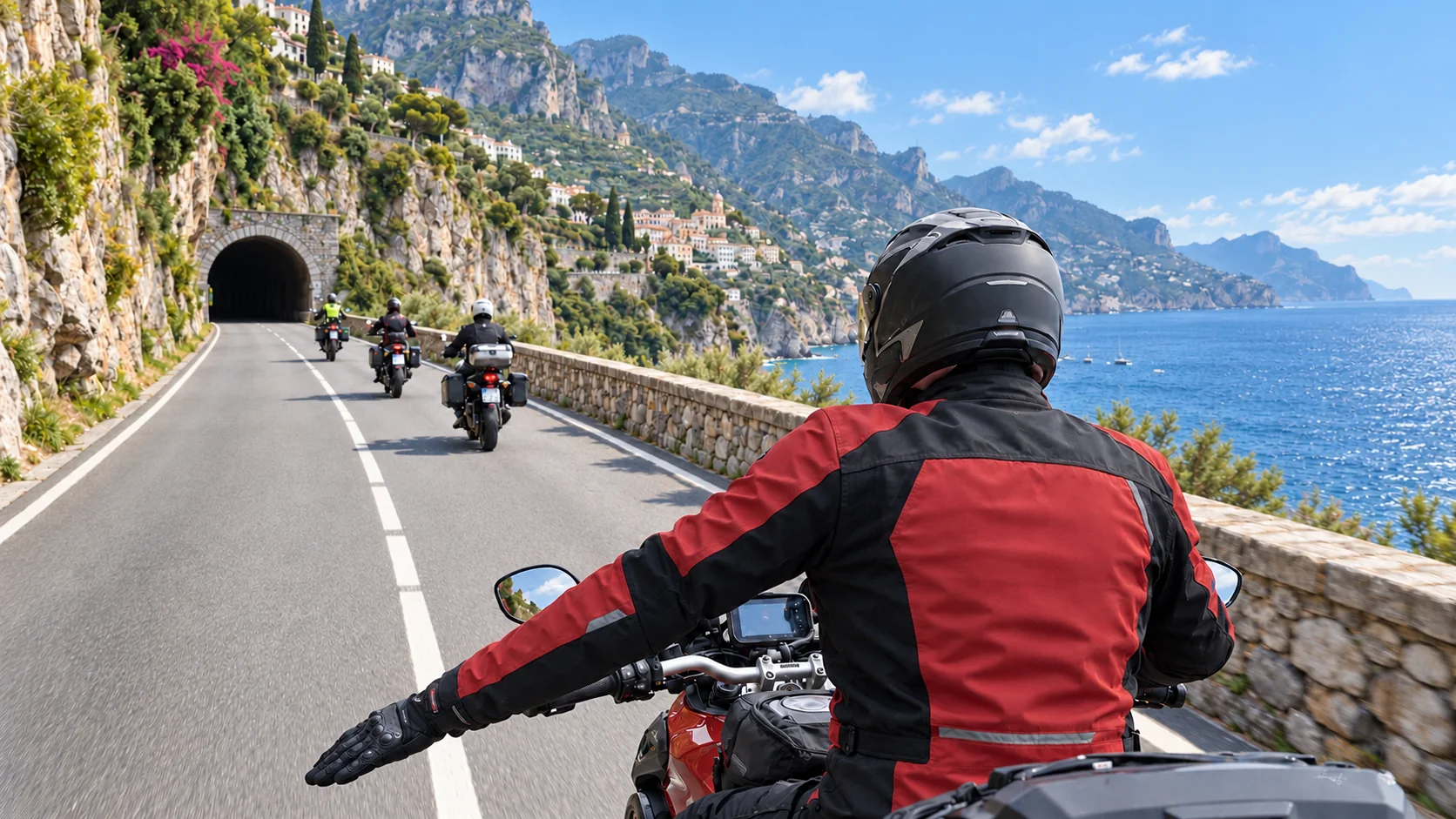
And don’t just stand in a circle; look at the gestures from behind, because that’s how you’ll see them while riding. A movement that looked obvious face-to-face could be confusing when you’re in the saddle, a few bikes back.
Motorcycle Hand Signals Chart: A Quick Reference
Here are some of the most common American group-riding signals, but double-check with your guide. Only signal when it’s safe, and keep both hands on the controls whenever you need them.
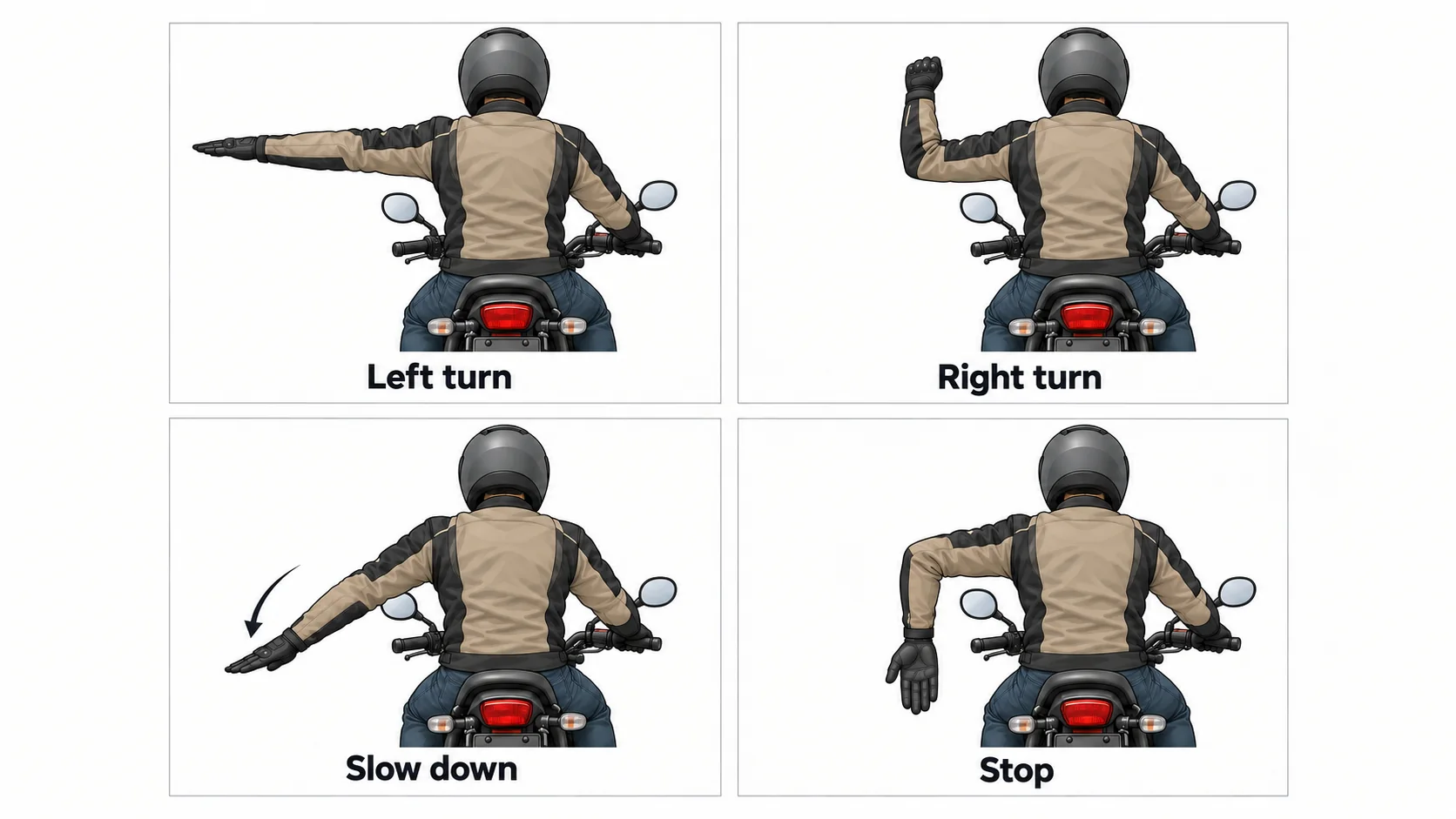
| Signal | Gesture | Message |
|---|---|---|
| Left turn | Left arm straight out, palm down | Get ready to turn left; check signals and the road. |
| Right turn | Left arm raised, elbow bent at 90 degrees, fist closed | Get set for a right turn. |
| Slow down | Left arm out, palm down, moving downward | Ease off; something’s ahead. |
| Stop | Left elbow bent, forearm down, palm facing back | Prepare to stop; don’t crowd the bike in front. |
| Road hazard on the left | Point down with the left hand | Watch for trouble on the left. |
| Road hazard on the right | Some groups point with the right foot | Look for issues on the right; only signal if it’s safe. |
| Single file | One finger raised | Ride in one line, keeping your space. |
| Staggered formation | Two fingers raised | Use staggered positions with space between motorcycles. |
| Fuel stop needed | Point at the fuel tank | A rider needs fuel. |
| Turn signal left on | Open and close the left hand | Check whether your turn signal is still flashing. |
The meaning of motorcycle hand signals can vary between groups, so it’s easy to mix up commands for slowing down, stopping, or pulling off. A slow down signal means reduce your speed, a stop signal means get ready to halt, and pull off means look for a safe place to leave the traffic lane.
Motorcycle Hand Signals for Turning
For most of these, you’ll use your left arm; that way your right hand stays on the throttle. Take care: your left hand also works the clutch, so don’t signal if you need both hands. Give your signal early, while the bike’s stable. Never signal through a turn or while braking, shifting, or wobbling at low speeds.
Always use your bike’s turn signals along with the hand gesture. Your indicators and brake lights help drivers understand what you’re doing; the hand sign is an extra message for the group. Remember to turn off your signals after the maneuver; otherwise, riders behind will be left guessing.
If you don’t understand what someone’s signaling, stick to the plan from the briefing. Don’t try a dicey move just to follow blindly.
Warning About Road Hazards
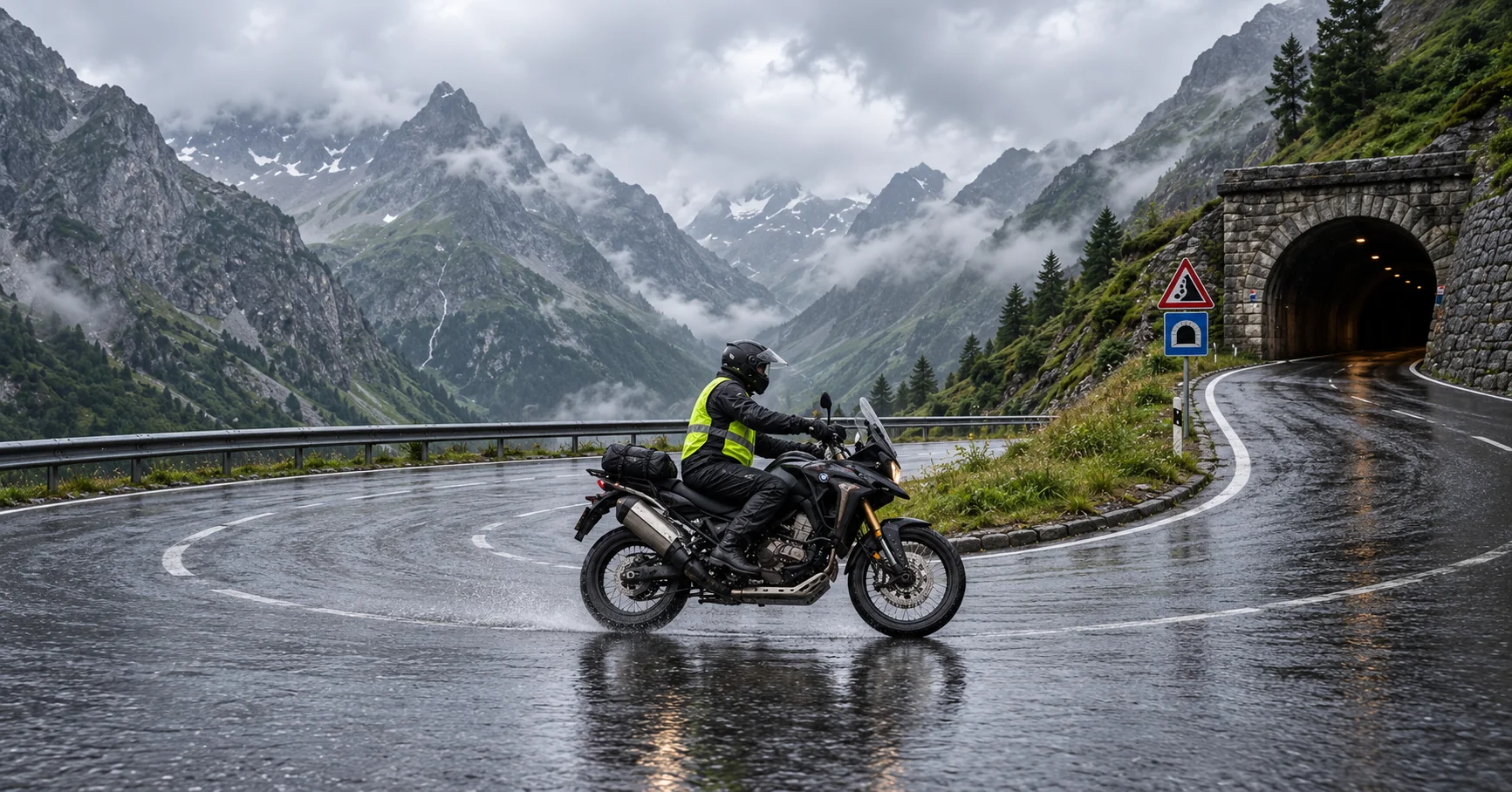
Think about the rider behind you; they might not see that patch of gravel or the fresh pothole in time. Giving a quick warning can make all the difference. Groups usually point with their left hand for hazards on the left and might use the right foot for the right side. Decide on this before starting out. If you need both hands or feet to control the bike, focus on riding; skip the signal.
As the rider behind, look for the actual hazard, not just the gesture. Don’t blindly follow someone’s line. Keep your eyes up and give yourself time to react. If the rider ahead points at loose gravel near a bend, slow down, read the turn, and choose your own line. Swerving last second just because someone else did is a recipe for trouble.
When it’s wet or tricky, stay alert. It gets tougher to spot and avoid hazards, so take extra care. The guide to riding a motorcycle in rain in Italy covers wet roads, visibility, and knowing when to stop.
Formation Signals: Stay Flexible
One finger up usually means a single-file formation; two fingers signal staggered formation. These aren’t orders to close all gaps or ride shoulder to shoulder. In a staggered formation, every other rider is offset in the lane, so you get more visibility and space. Single file gives each of you room to pick your own line, especially on narrow Italian roads.
Don’t confuse two fingers raised as a formation signal with a low two-finger biker wave to an oncoming rider. Context matters.
Fuel and Rest Stops
Need fuel? Point at your tank, and do it early. The more time you give, the more options you’ll have. Don’t risk running dry in the middle of nowhere. Some groups have their own signals for drinks, snacks, or bathroom breaks. Figure out those details before you ride, and practice the gestures while parked:
- Fuel stop: pointing at the tank is a common request to refuel.
- Comfort stop or rest break: some groups use a closed fist moved up and down.
- Refreshment stop: a thumb brought toward the mouth may mean a drink or food stop.
- Pull over: agree on the signal for an unscheduled stop or help, and what to do next.
If you need an unscheduled break or help, work out a signal and what the guide expects you to do next. Just because you signaled doesn’t mean it’s safe to pull over anywhere; wait for a place where stopping makes sense. Don’t push yourself to the point of exhaustion; speak up early.
Passing Signals Back: Don’t Play Telephone
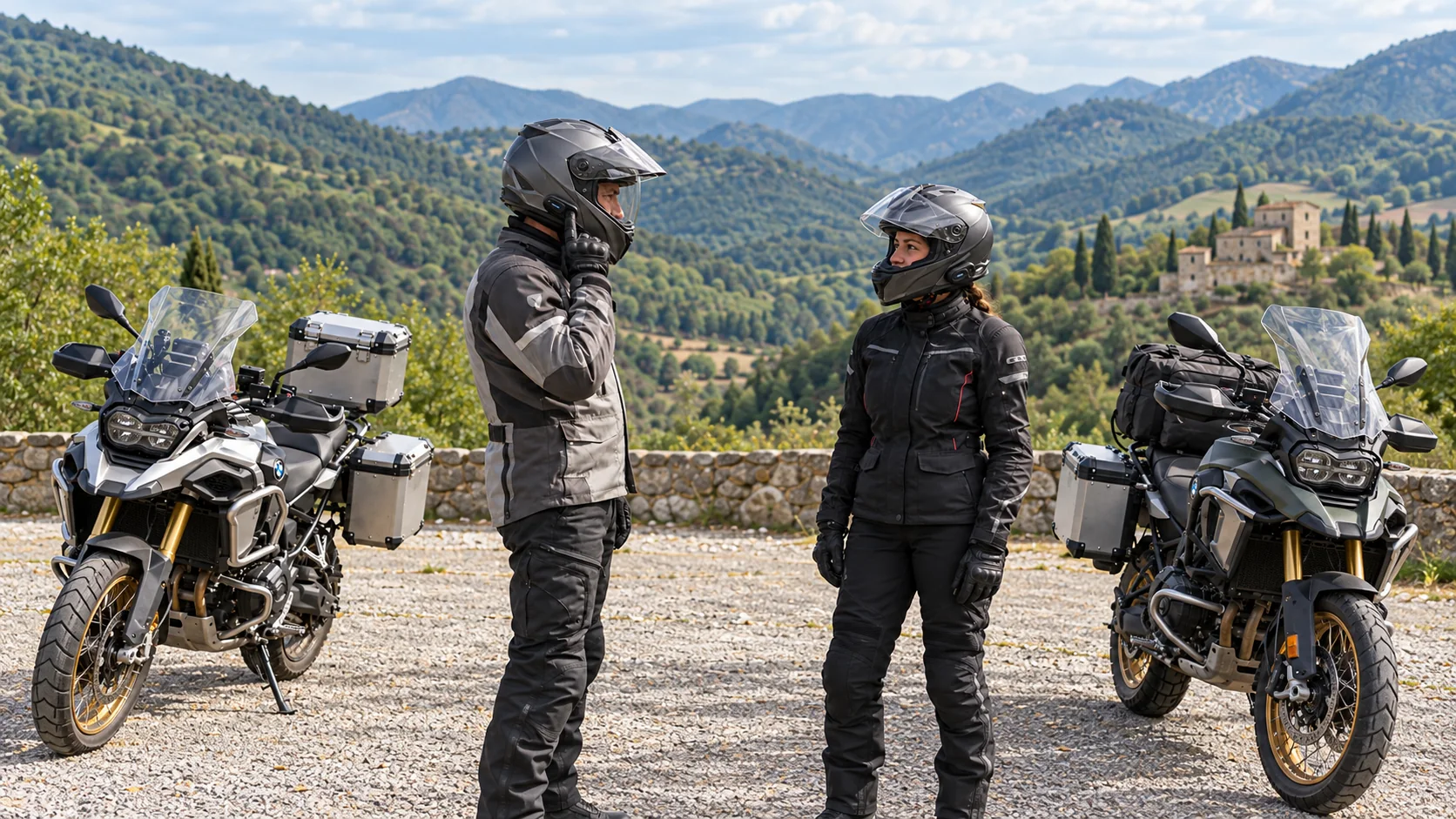
Often, you’ll need to relay hand signals down the line. Only do this when you’re sure of the message and it’s safe. Don’t guess. If you miss a signal, keep your focus and ask about it at the next stop. If your group uses motorcycle intercoms, check that everyone’s headsets can actually communicate. Technology is great, until someone can’t hear the leader. Make sure the basics (hand signals and regrouping plans) cover gaps in communication tech.
When in Doubt, Keep Calm and Ride Predictably
If you see a signal you don’t get, ride your line and stay predictable. A hand signal tells you what another rider wants to communicate. It doesn’t give you priority at a junction or guarantee that an overtake is safe. If you get split from the group, use the agreed procedure from the briefing. Don’t ride dangerously just to catch up.
At your next stop, ask the guide to clarify what you saw. It’s much better to sort it out face-to-face.
Before Your First Group Ride in Italy
Don’t worry; nobody expects you to know every secret gesture. Focus on the basics: slow, stop, hazard, turn, formation. Make sure you know how to ask for fuel, a break, or help.
If this is your first guided ride, check out the beginner’s guide to guided motorcycle tours in Italy to see what else to expect. Ask how pre-ride briefings work and what’s expected for on-the-road communication. A little clarity before you start helps you avoid confusion when it matters most.
Frequently Asked Questions
What are the motorcycle hand signals?
They’re just hand gestures riders use to let each other know what’s happening: turns, stops, changes in speed, hazards, fuel, and so on. Most groups rely on the left arm and agree on a few extra signals for things like breaks. Learn your group’s set before you leave, and only signal when your bike’s under control.
Why do motorcyclists tap their helmets?
A helmet tap can mean police ahead, but not everywhere. The NSW Government’s group-riding guidance in Australia, for example, uses it to mean “mark a corner” for other riders. That’s why it pays to check what each gesture means on your tour; don’t just assume signals mean the same thing everywhere.

-
Tours
Alps, Lakes & Dolomites Dream Ride Tour (Black Friday 15%)
Price range: $5,610.00 through $8,780.00 Select options This product has multiple variants. The options may be chosen on the product page -
Tours
Amalfi Coast, Capri & Ischia Dream Ride Tour (Black Friday 15%)
Price range: $5,950.00 through $9,375.00 Select options This product has multiple variants. The options may be chosen on the product page -
Tours
Venice, Prosecco Hills and Emerald Slovenia Tour (Black Friday 15%)
Price range: $6,375.00 through $9,630.00 Select options This product has multiple variants. The options may be chosen on the product page -
Tours
The Heart of Italy: Tuscany, Umbria & Apennine Passes Tour (Black Friday 15%)
Price range: $5,440.00 through $8,390.00 Select options This product has multiple variants. The options may be chosen on the product page -
Tours
The Three-Nation Alpine Grand Tour (Black Friday 15%)
Price range: $6,545.00 through $10,395.00 Select options This product has multiple variants. The options may be chosen on the product page -
Tours
The Mediterranean Odyssey: Sardinia & Corsica Tour (Black Friday 15%)
Price range: $6,590.00 through $10,395.00 Select options This product has multiple variants. The options may be chosen on the product page -
Tours
The Sardinia Island Discovery Tour (Black Friday 15%)
Price range: $4,675.00 through $7,370.00 Select options This product has multiple variants. The options may be chosen on the product page