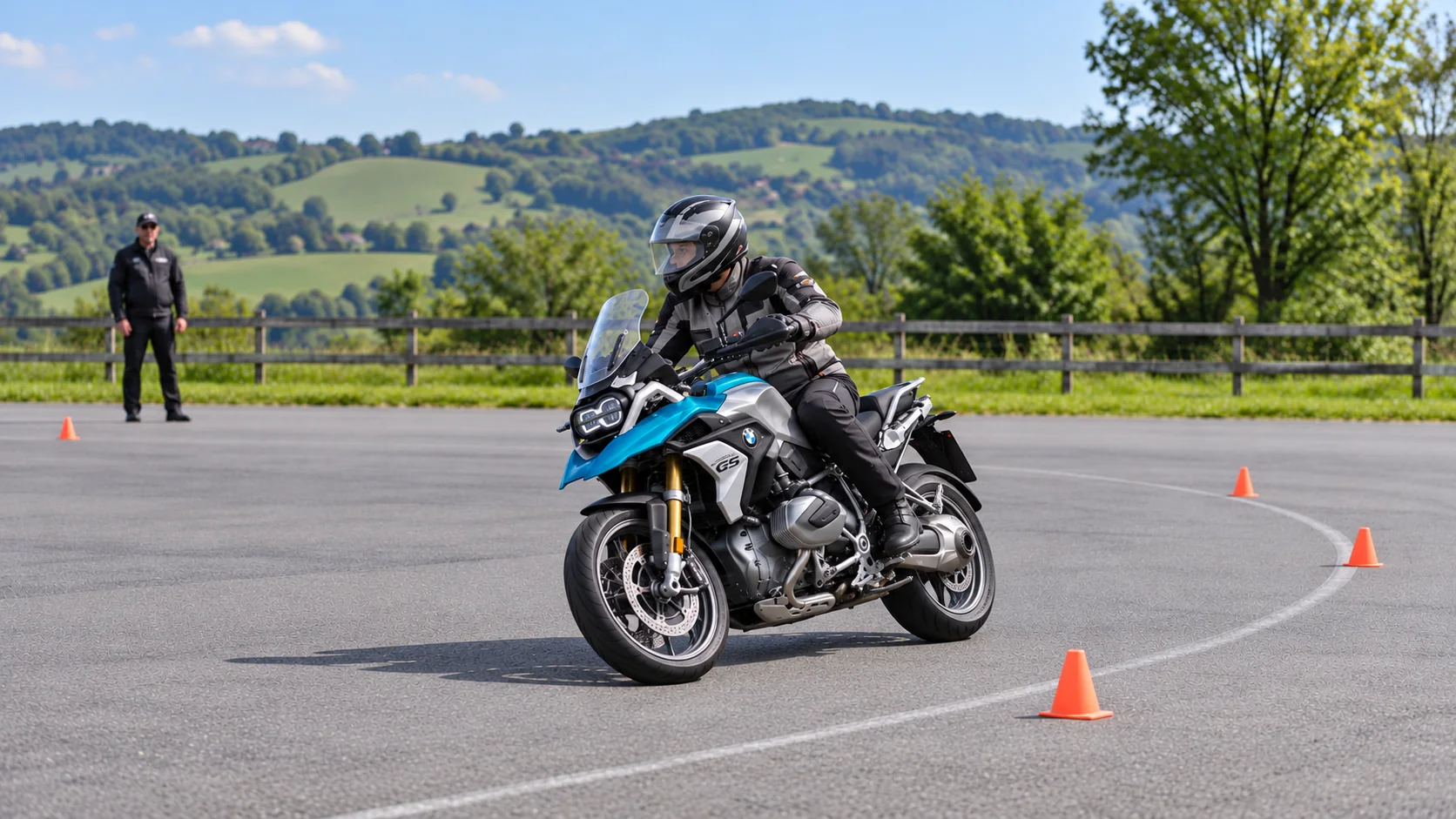
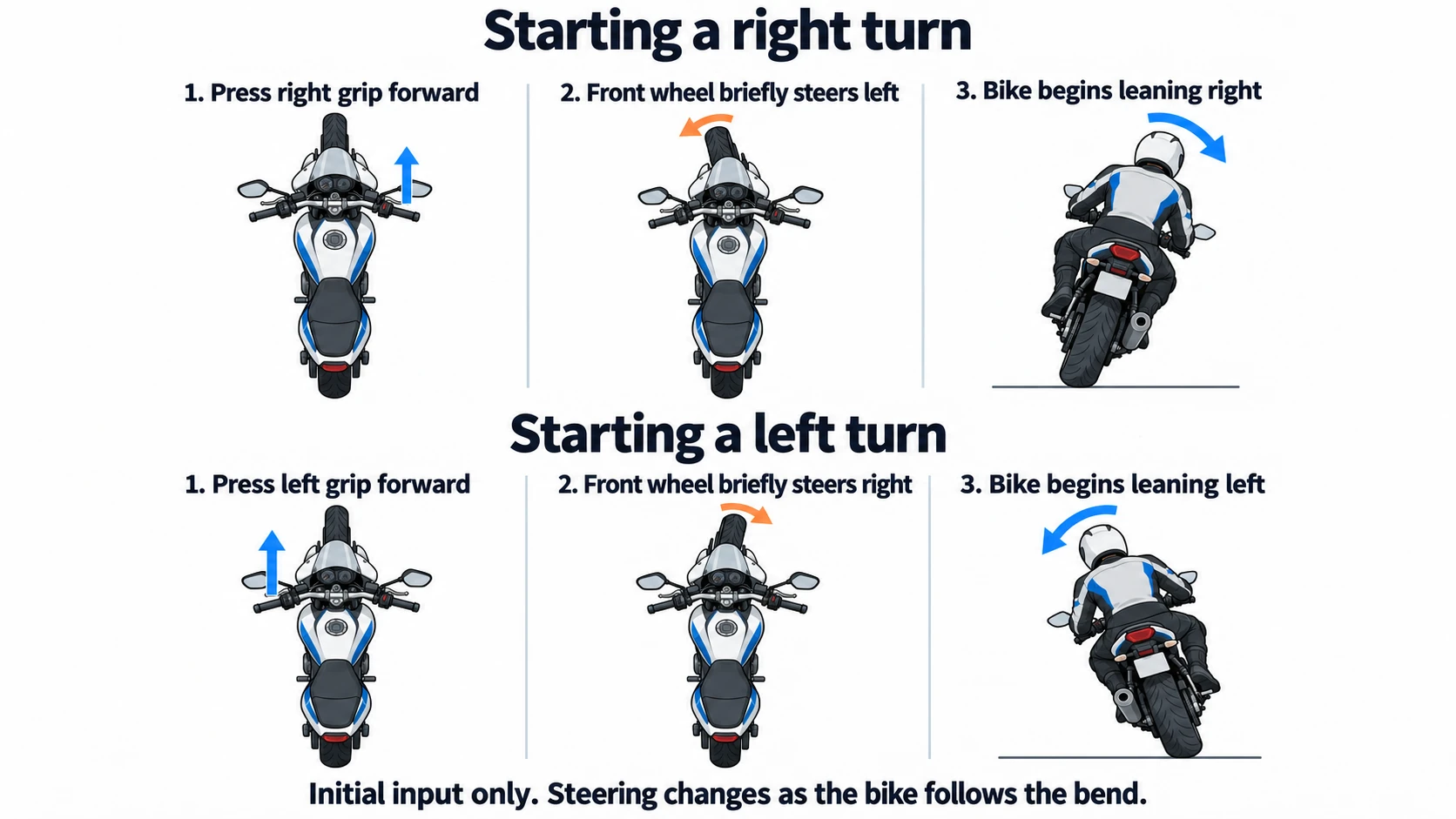
Countersteering is the steering input that gets a two-wheeled motorcycle to lean into a turn. If you want to go right, you push forward on the right handgrip. To go left, you push forward on the left. When you do this, the front wheel actually points very briefly in the opposite direction, but that’s what starts the lean that takes you into your intended turn.
That moment can trip people up. “Press right, steer left” sounds like two different things, but they’re just parts of the same process.
If you’re planning to ride in Italy or anywhere with twisty roads, getting a feel for countersteering helps you understand what your hands are already doing. It’s also a good topic to bring up with a riding coach before taking off.
So, What Is Countersteering?
To get through a curve at regular road speeds, a motorcycle has to lean. Countersteering is just the little nudge at the handlebars that kicks off that lean.
When you’re talking about a turn, the inside handgrip is the one in the direction you want to go. So if you’re turning left, the left grip is the inside one. Press it forward, and the front tire turns outward for a split second. That’s what starts the bike leaning into the corner. Once it settles into the turn, the front wheel normally steers into the curve.
Don’t mush these steps together. Countersteering doesn’t mean spending the whole turn with the front wheel pointed away from where you want to go.
Here’s how it breaks down for the rider:
| Intended turn | Initial handgrip pressure | Brief front-wheel movement | Bike begins to lean |
|---|---|---|---|
| Left | Push left grip forward | Right | Left |
| Right | Push right grip forward | Left | Right |
Keep in mind, “push forward” means just that: forward, not down. Push straight ahead while keeping both hands on the bars.
Why Does the Bike Lean in the Opposite Direction?
It’s about where the tires meet the road. That quick outward turn shifts where the front tire contact patch is in relation to the bike and rider. The result: the motorcycle starts to tip into the turn you actually want.
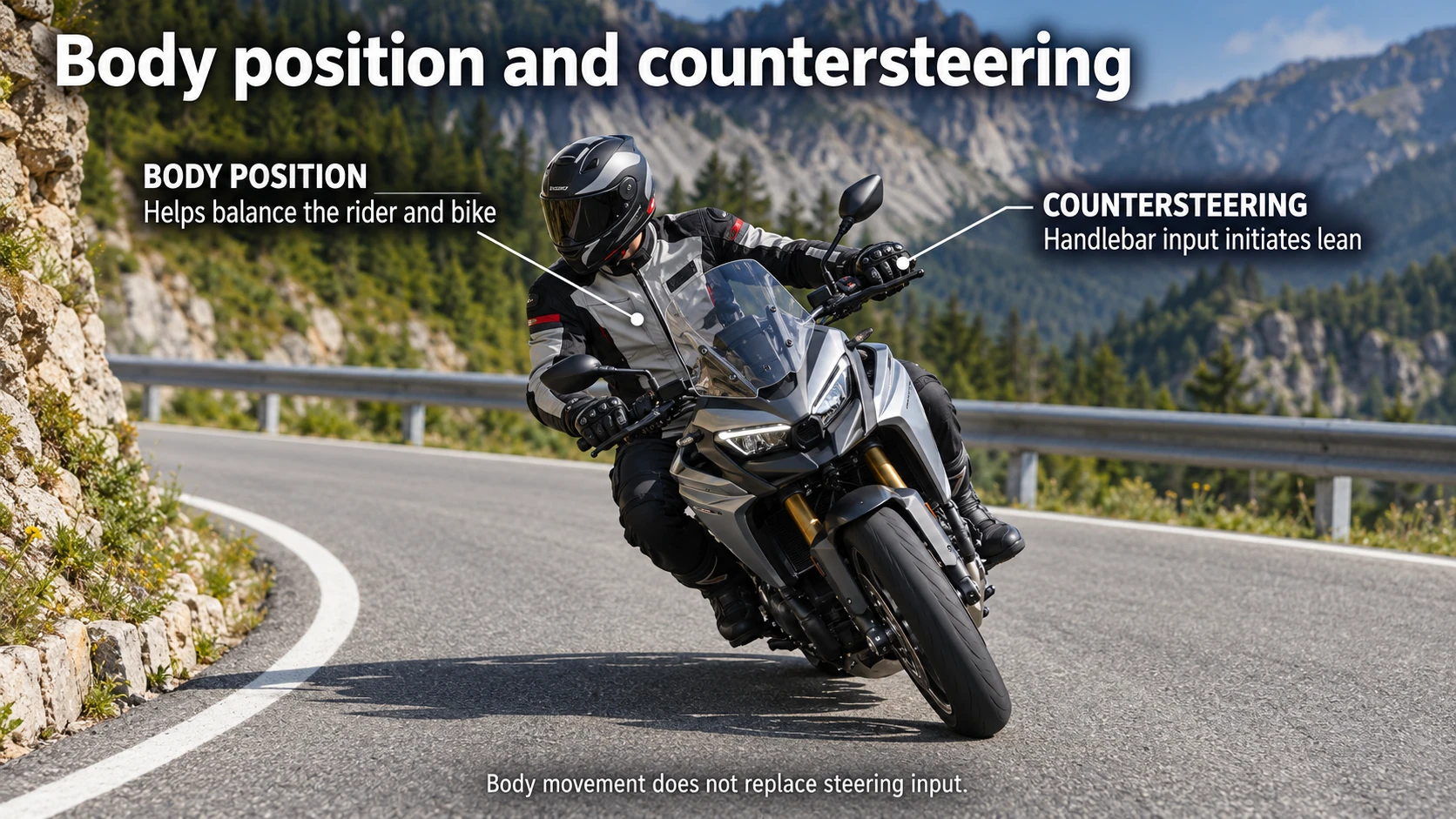
You don’t need to crunch physics equations here, but it matters to separate that first nudge from the rest of the turn. Yamaha explains it the same way; simply shifting your body won’t corner the motorcycle for you.
Body position still affects how you ride, of course. Moving your shoulders inside a turn can affect your balance, but it can’t replace using the handlebars.
Is Countersteering Just Slow-Speed Steering?
Not really. During low-speed maneuvering, like a parking lot U-turn, you turn the bars in the direction you want to go. You’re using clutch control, balance, and body movement.
At speed, the handlebar movement to lean the bike is tiny. Most riders are countersteering by habit and don’t even realize it.
There’s no magic speed where motorcycles suddenly switch steering styles. Don’t worry about nailing down an exact number. Keep in mind that slow, sharp turns and flowing road corners are different skills. Both need practice, ideally with someone who can coach you through them.
Just because you can U-turn in a parking lot doesn’t mean you’re ready for a day’s worth of mountain corners. Spend time on both.
How to Countersteer a Motorcycle on the Road
Countersteering is part of a bigger routine. It doesn’t make up for entering a curve too fast or picking a bad line.
Here’s how you put it all together:
- Read the corner before you go in. Watch where it goes, how much you can see, the surface, the space inside your lane. Pick your turn-in point based on what you see, not a set distance.
- Slow down ahead of the bend. Set your entry speed and gear before you turn if you can. Always leave a little margin in case things tighten up or you can’t see far ahead.
- Look through the turn, but keep scanning. Stay focused on the road ahead, including the surface nearby. Looking way ahead doesn’t mean ignoring what’s right in front of you.
- Initiate the lean smoothly. Push forward on the grip on the side you want to go. Don’t jab at it. Fine-tune how hard you press based on how the bike reacts and where you want it to go.
- Keep throttle control and steering smooth as you go. Guide the bike around the curve with the lean angle and inputs it requires. The first push isn’t an excuse to keep leaning harder the whole way through.
There’s no one-size-fits-all amount of handlebar pressure. It depends on your bike, speed, load, and the turn itself. A good instructor helps you connect what you feel at the grips to how the bike moves.
Common Mistakes That Make Cornering Tougher
Holding the Bars Against the Turn
That initial turn the “wrong” way is brief. Some riders think you should hold the bars forcibly in the opposite direction all the way round the corner, but it’s not true. Instead, focus on riding the path you want, adjusting as you go.
Stiff, Locked Arms
Tense arms can make smooth steering harder. Aim for relaxed arms while keeping your hands on the controls and your grip firm (not death-grip tight).
Thinking More Lean Always Fixes a Blown Line
Going wide in a corner? It might be down to your speed, late steering, focus, or even a surprise tightening curve. There’s a limit to how far you can lean. Road grip and bike clearance both play a role. “Just push harder” isn’t a strategy.
Braking, swerving, and mid-corner line changes are skills of their own. Practice them with an instructor, not by guessing in an emergency.
Only Looking at What You’re Scared to Hit
Target fixation can narrow your attention. Staring at a guardrail can distract you from the usable road ahead. Keep scanning for where you want the bike to go; your eyes gather information, but you still need to steer.
Why It Matters When Riding in Italy
Italian routes can be challenging, even if the mileage seems low. Tight bends, varying road conditions, new scenery, and an unfamiliar bike mean more to juggle.
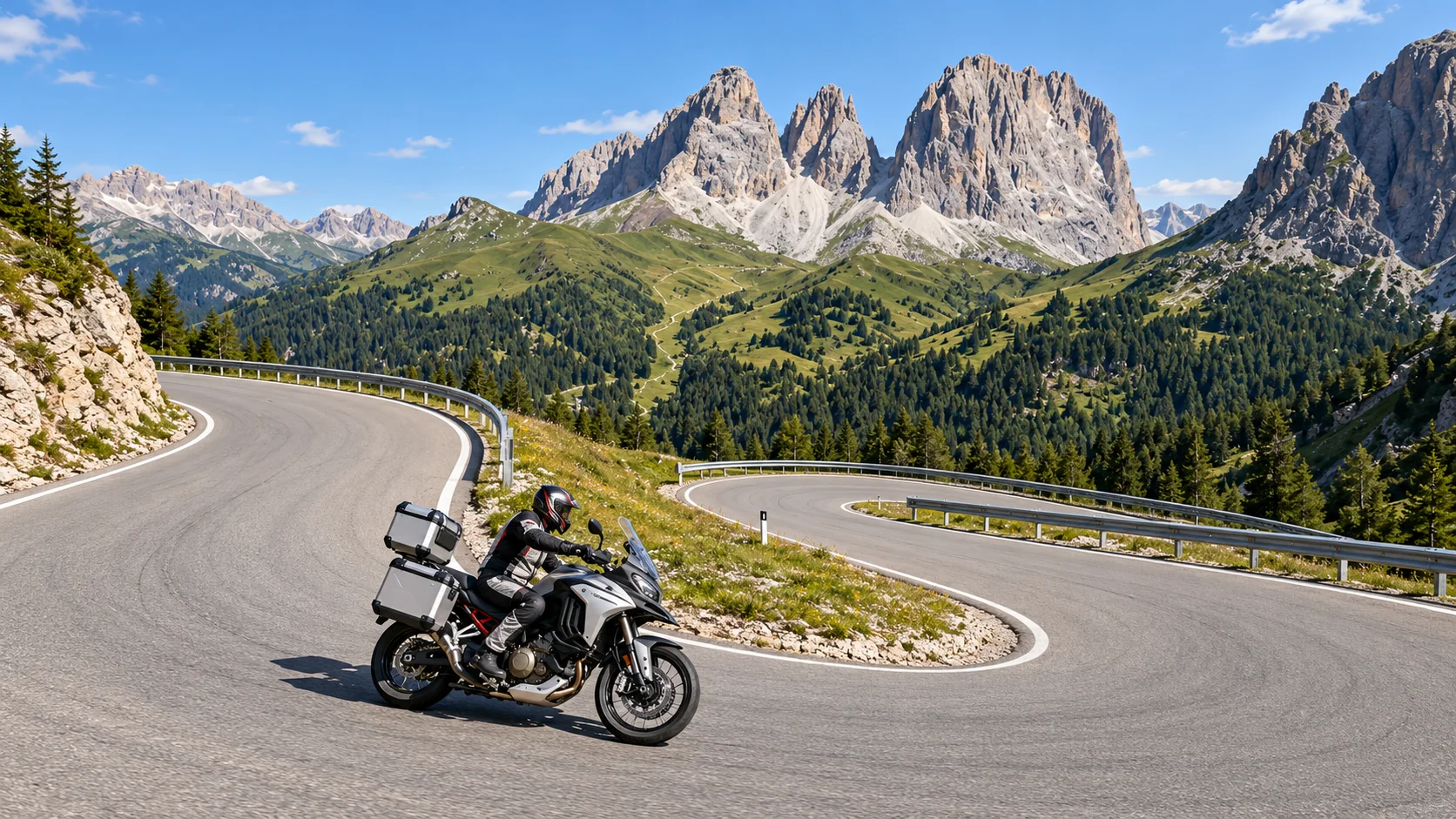
That doesn’t mean every road is a beast, but you want your plans to match your riding level. Our Alps guide covers how to pick a base and manageable routes.
Keep countersteering in mind in the mountains:
- Tight uphill switchbacks can involve different speeds and balance demands from wide, sweeping bends.
- Carrying a passenger and luggage changes the load. Get familiar with the bike as you’ll actually ride it.
- Weather, loose gravel, or rough patches all eat into your margin. Good steering doesn’t overcome bad traction.
- Chasing someone faster can push you past your comfort zone. Plan to ride at a pace that fits you both.
Check our guide on riding in the rain if the forecast looks wet, and see our Dolomites pass guide for route ideas.
Go Over the Skill Before Your Flight
If this still sounds a little fuzzy, arrange rider training before your trip. Ask about pressing to initiate the lean, slow maneuvering, judging corners, and general bike control.
MSF’s Basic RiderCourse lists these basics and points to further skills practice. When you talk to a trainer, explain how much and where you’ve been riding, not just that you have a license.
Drills work best in a proper training area with supervision. Hands on the controls, full gear, and don’t try new techniques in live traffic.
Pick a Tour That Fits How You Ride
Getting through your favorite local twisty is a start. But think about whether you can link corners confidently all day, manage tight maneuvers, and keep enough brain space for traffic and directions.
When looking at tours, be open about your comfort level and ask questions about the routes: width, curve sharpness, hours on the bike, backup plans if it’s too much.
For example, Italy Moto Tours’ Alps, Lakes & Dolomites Dream Ride is for advanced riders. Check out the itinerary, and talk over your experience with the organizers before booking. Don’t rush into a tough trip if you’re rusty. Practice first.
FAQs
What Is Countersteering on a Motorcycle?
It’s the brief steering input that starts a two-wheeled motorcycle’s lean into a turn. Push forward on the right grip to go right, or forward on the left to go left. Just remember, you don’t hold the front wheel opposite the turn the whole way.
How Does Countersteering Work?
Countersteering briefly changes the front tire’s path relative to the bike and rider to start a lean toward the intended turn. Steering then adjusts as you follow the curve. The push to start the lean is separate from how the front wheel sits in the turn.

-
Tours
The Sardinia Island Discovery Tour (Black Friday 15%)
Price range: $4,675.00 through $7,370.00 Select options This product has multiple variants. The options may be chosen on the product page -
Tours
Alps, Lakes & Dolomites Dream Ride Tour (Black Friday 15%)
Price range: $5,610.00 through $8,780.00 Select options This product has multiple variants. The options may be chosen on the product page -
Tours
The Heart of Italy: Tuscany, Umbria & Apennine Passes Tour (Black Friday 15%)
Price range: $5,440.00 through $8,390.00 Select options This product has multiple variants. The options may be chosen on the product page -
Tours
The Mediterranean Odyssey: Sardinia & Corsica Tour (Black Friday 15%)
Price range: $6,590.00 through $10,395.00 Select options This product has multiple variants. The options may be chosen on the product page -
Tours
The Three-Nation Alpine Grand Tour (Black Friday 15%)
Price range: $6,545.00 through $10,395.00 Select options This product has multiple variants. The options may be chosen on the product page -
Tours
Amalfi Coast, Capri & Ischia Dream Ride Tour (Black Friday 15%)
Price range: $5,950.00 through $9,375.00 Select options This product has multiple variants. The options may be chosen on the product page -
Tours
Venice, Prosecco Hills and Emerald Slovenia Tour (Black Friday 15%)
Price range: $6,375.00 through $9,630.00 Select options This product has multiple variants. The options may be chosen on the product page